Drawing Machine Design
Mechanical design project
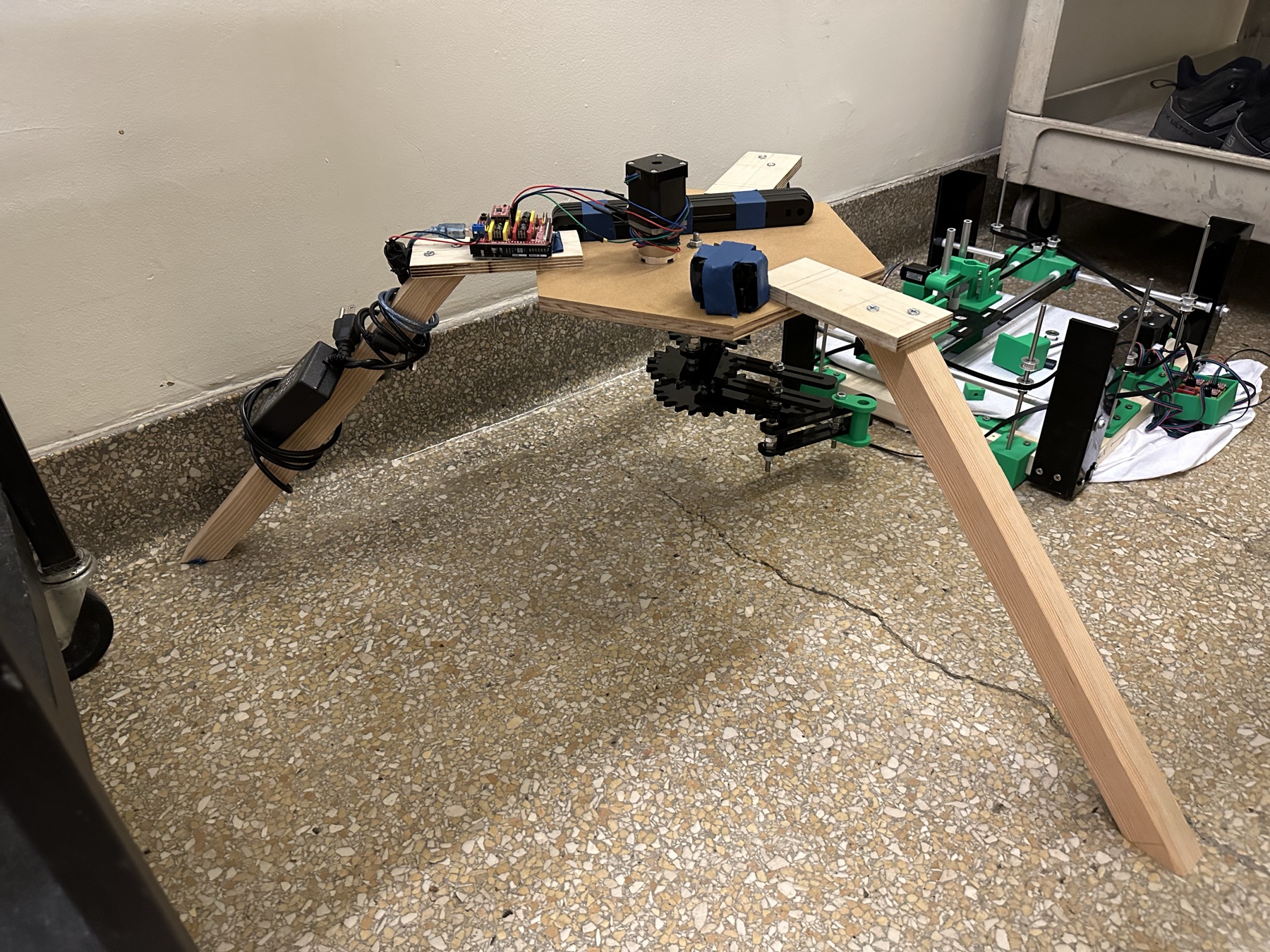
The drawing machine as a 3D model. Drag to rotate.
Summary: Designed and built a motor-driven drawing machine that uses purely mechanical motion to draw on a t-shirt. A chain of three linked axles, gears and sprockets converts one continuous motor rotation into layered rotating and orbiting motion at the pen tip, producing spirograph-like rosettes and looping flower patterns.
Skills
- Mechanical design: axle, gear and sprocket layout, offsets and link lengths
- Fabrication: cutting, drilling, assembly and alignment of a wooden frame and shafts
- Kinematics, tolerances and structural rigidity
Technical details
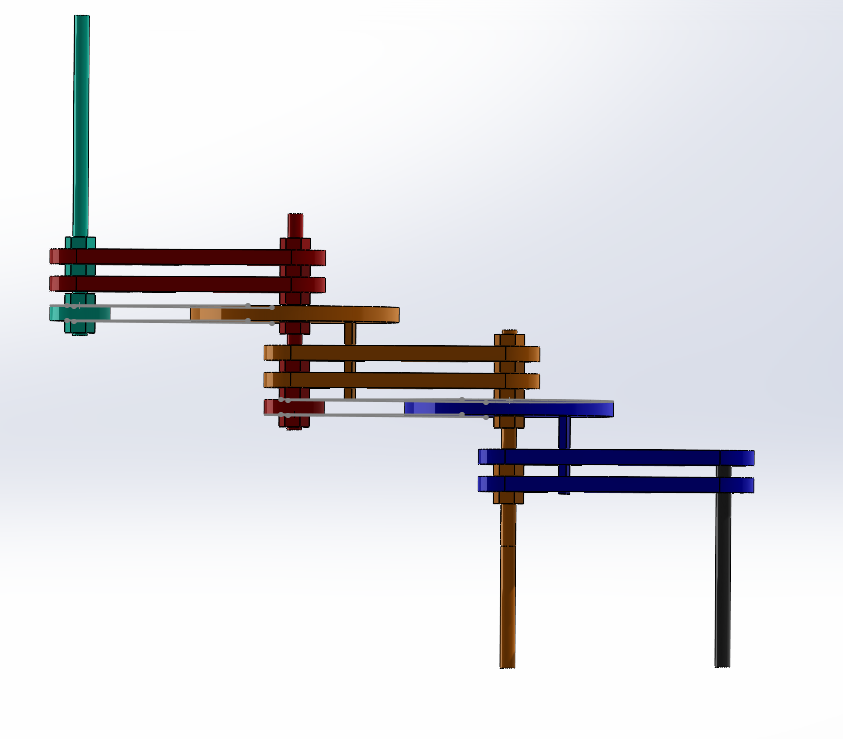
How it works. A single motor spins a main axle. Attached to it is a second, offset axle driven through a gear and sprocket, so it both spins and orbits the center. The second axle drives a third, outer axle in the same way, and a pen is mounted at the end of that final link above a flattened t-shirt. Because every stage both rotates and revolves, the pen traces coupled rotations with different radii and offsets, which creates the layered rosettes and drifting loops.
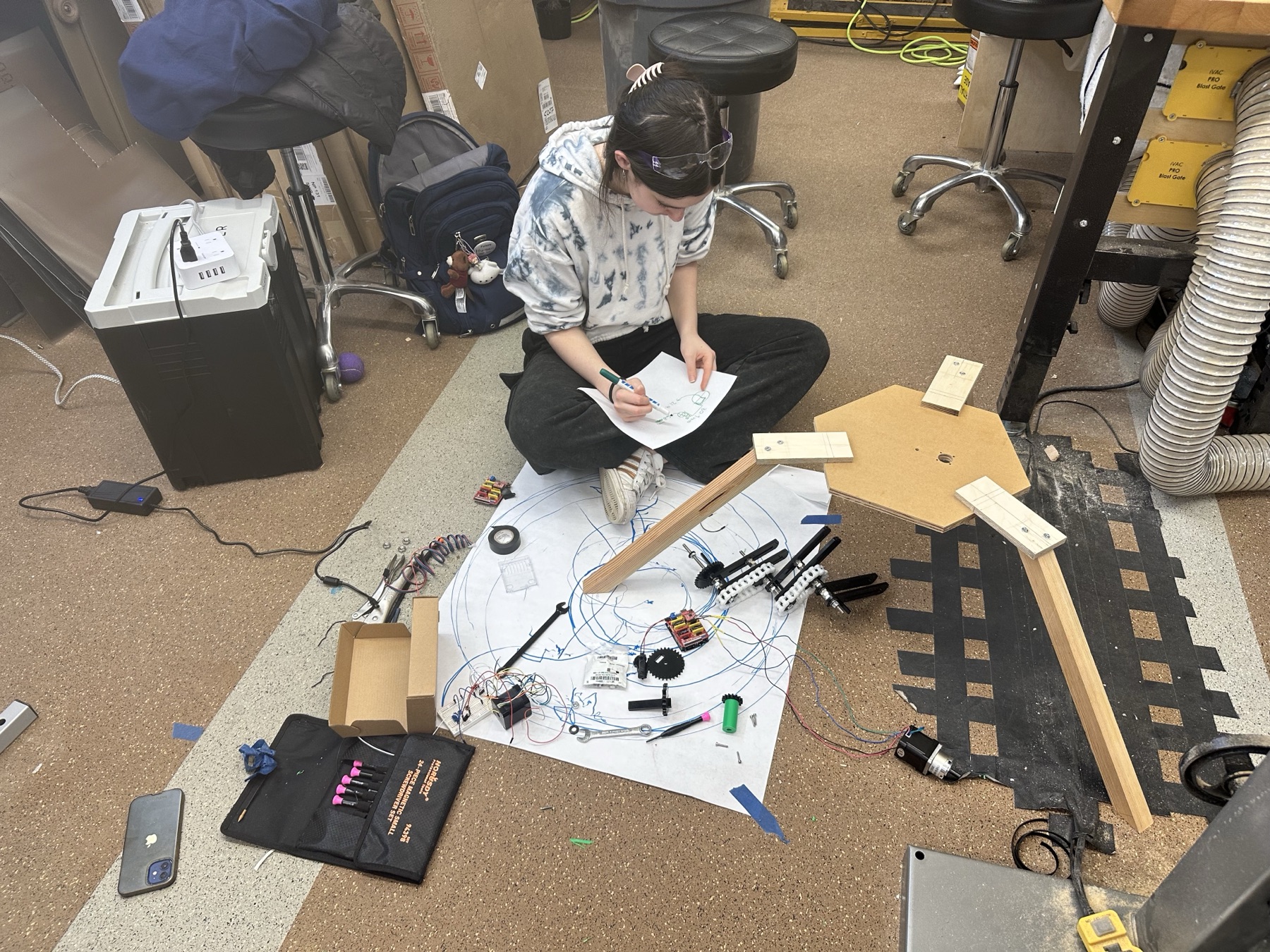
Design. I sketched concepts for how chained axles, gears and sprockets could move a pen along non-trivial paths, then designed the layout of the three axles so each stage both spins and revolves around the previous one.
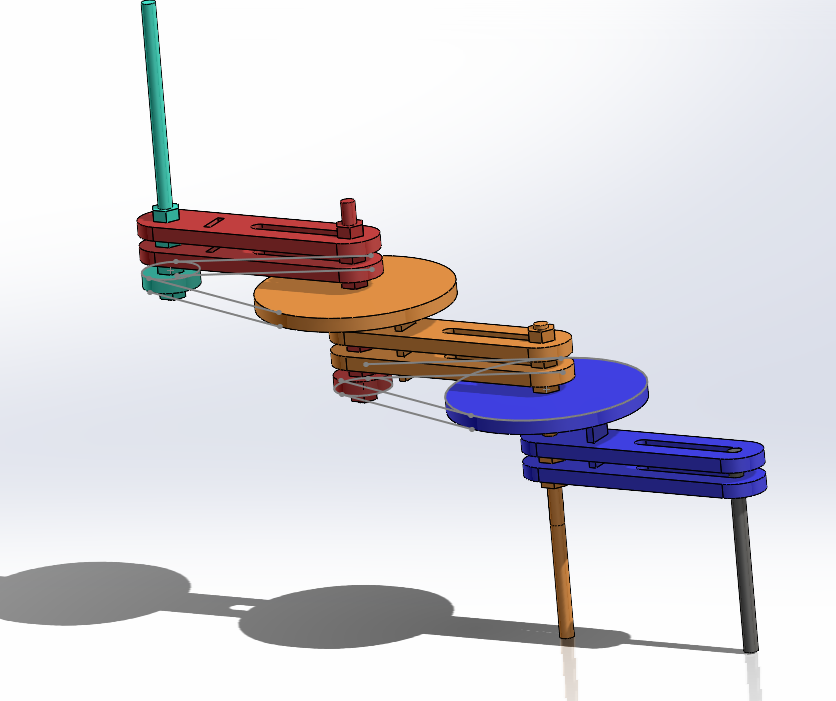
CAD model of the three linked axles, gears and sprockets.
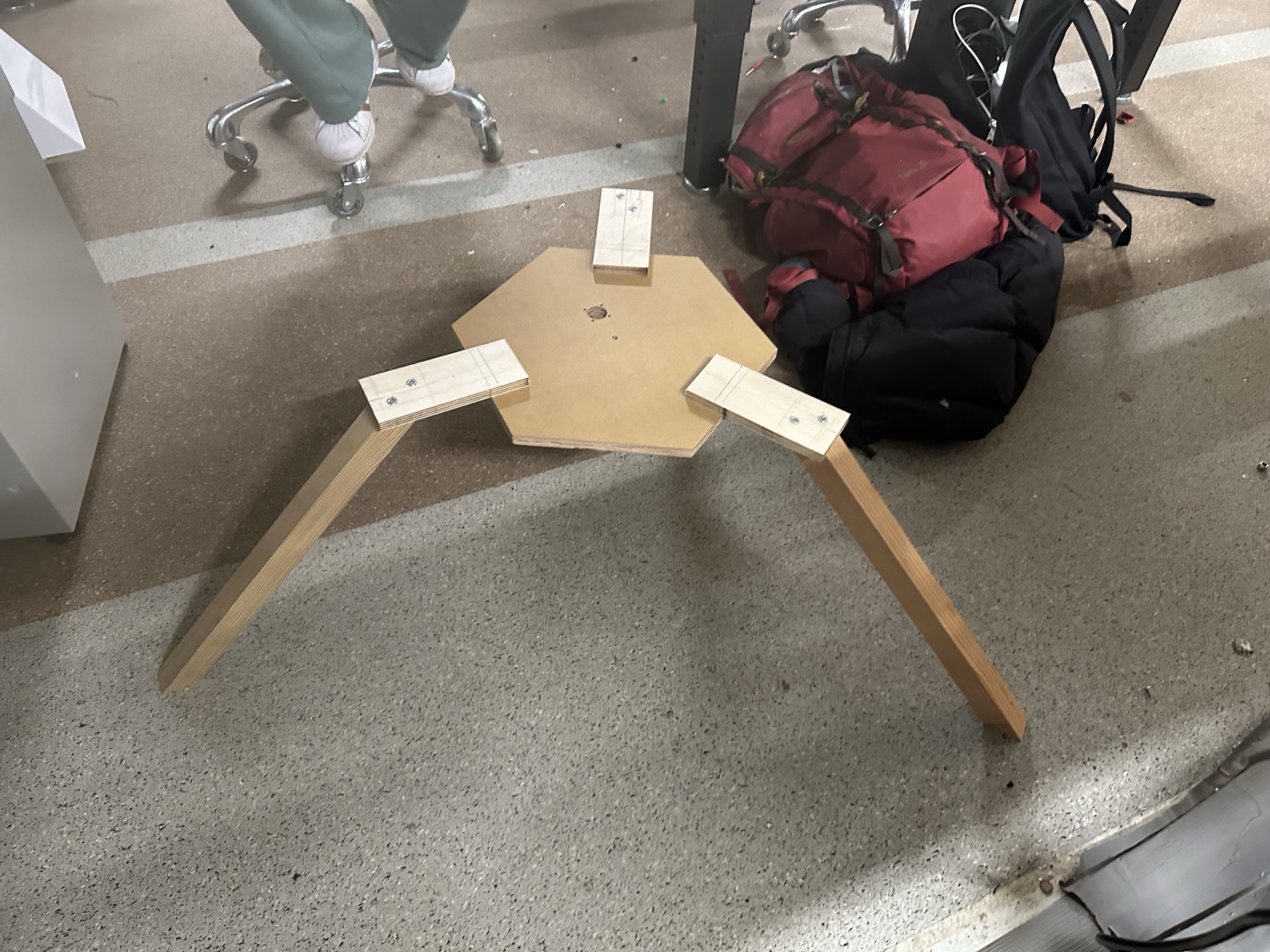
Build. I built a wooden base with three outward-slanting legs to form a rigid tripod-style structure, then mounted the motor, axles, gears and pen holder, aligning the parts to minimize friction and binding.
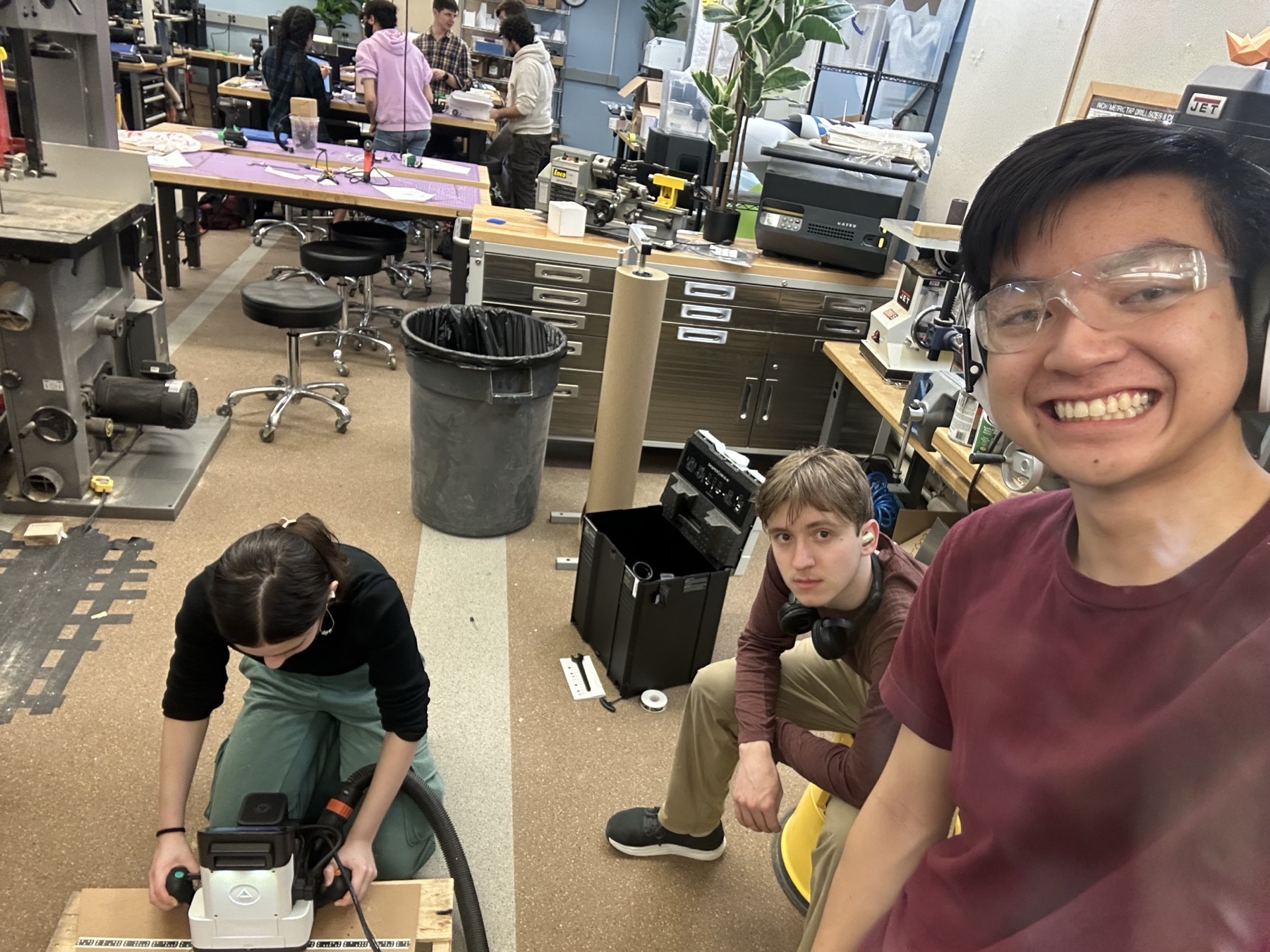
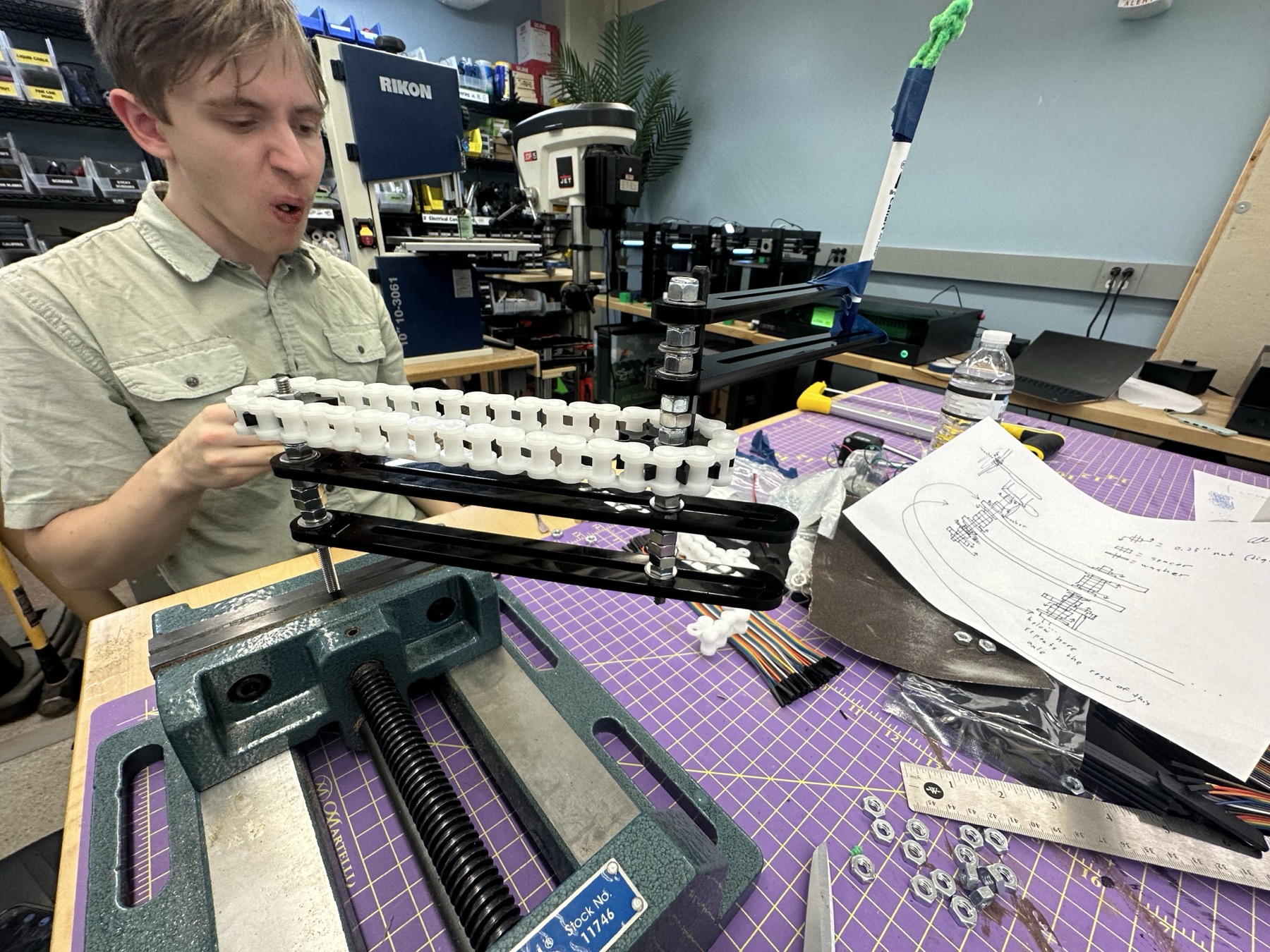
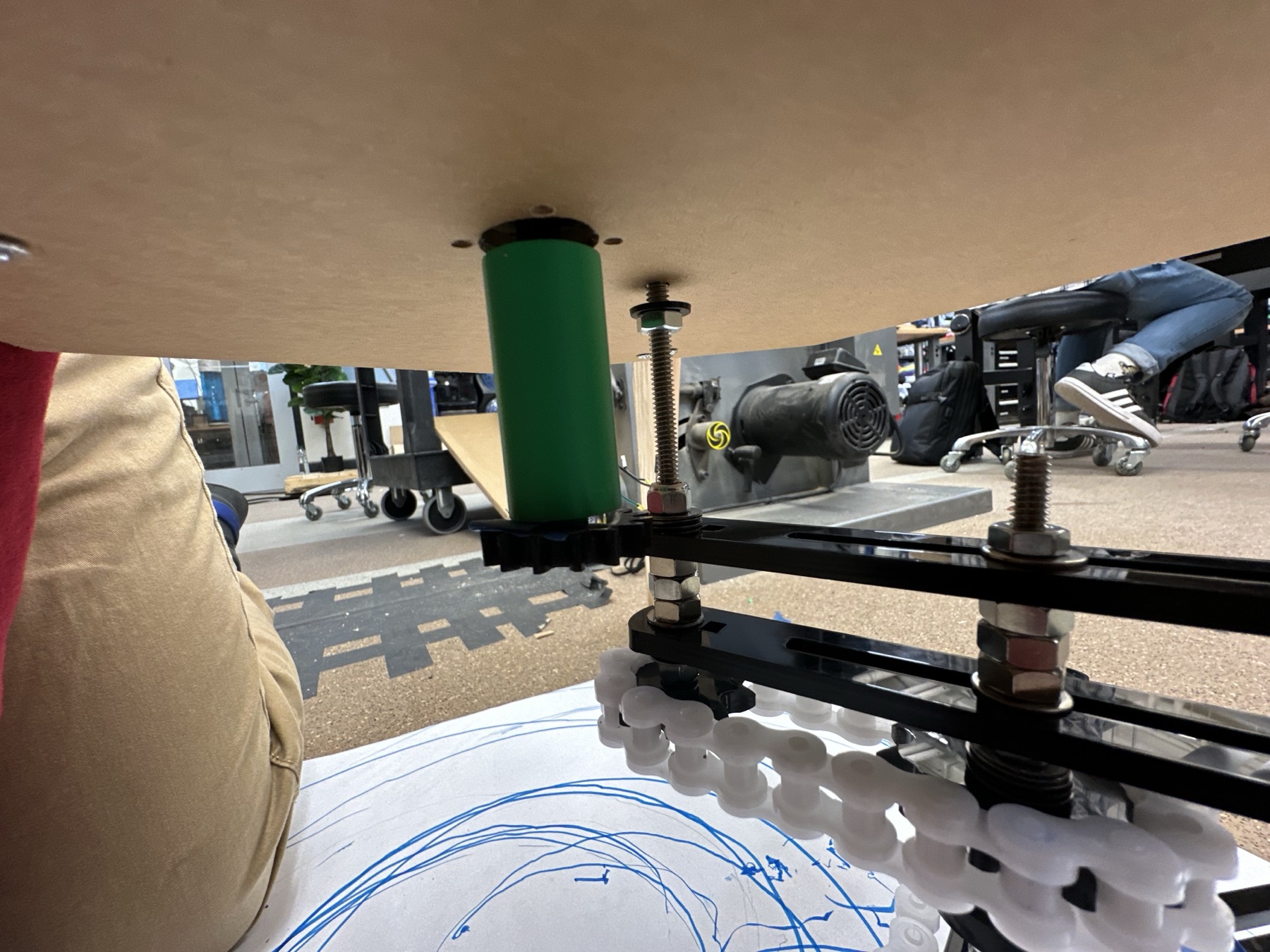
Concept sketches, the wooden base and motor mounting.
Testing. I ran drawing tests and observed how the patterns evolved as the mechanism cycled.
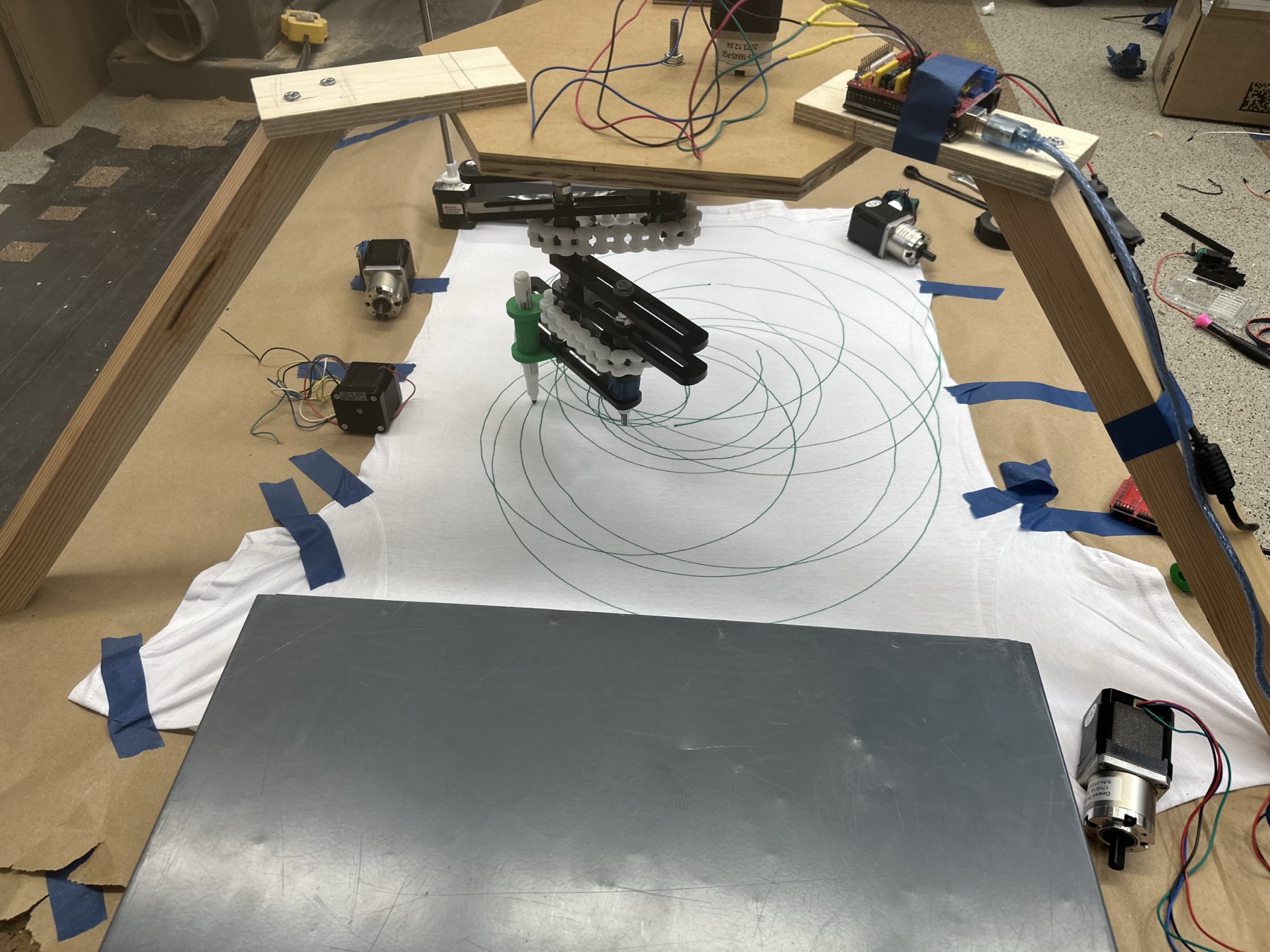
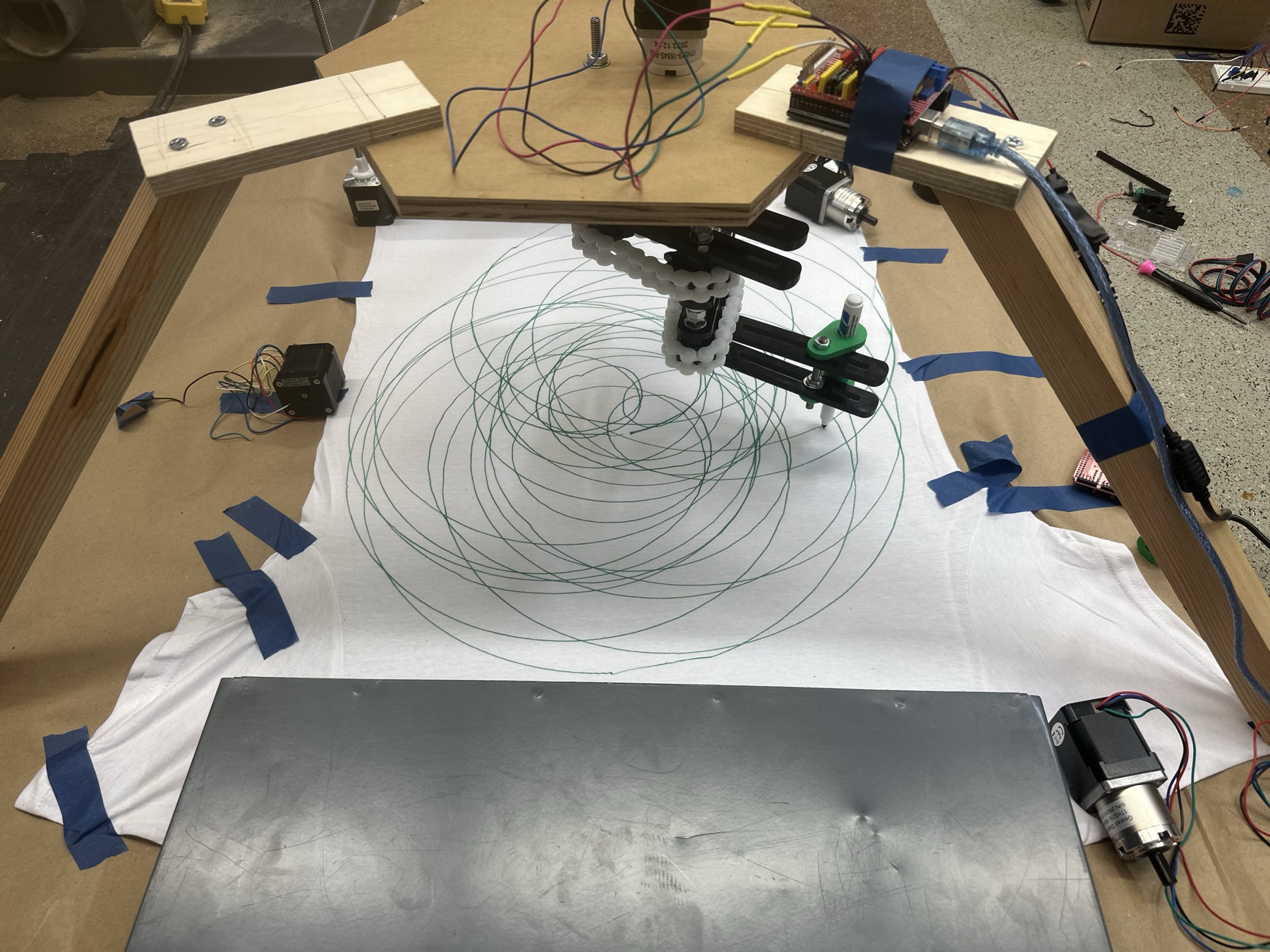
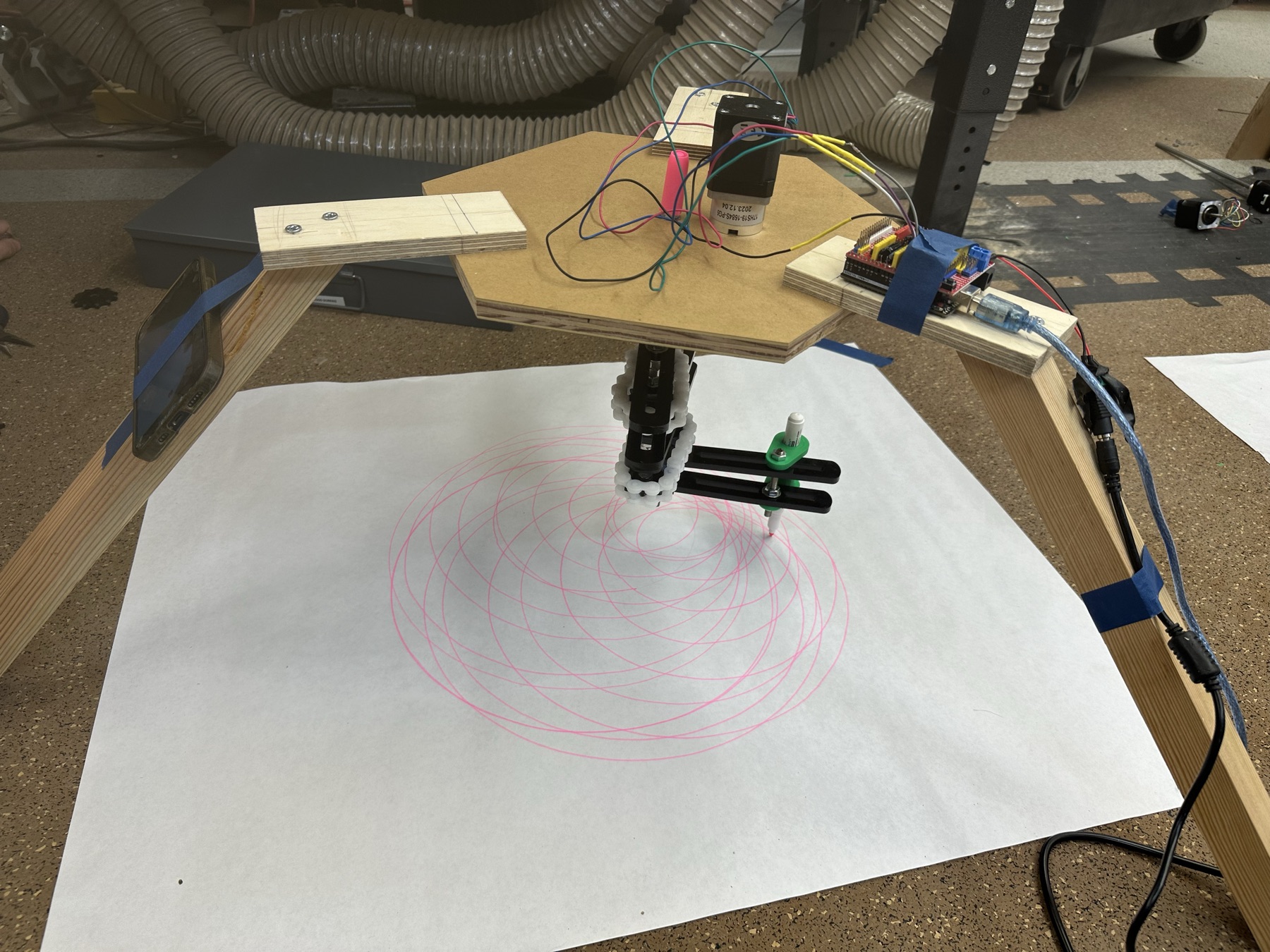
Drawing test setup, machine detail and the machine drawing.
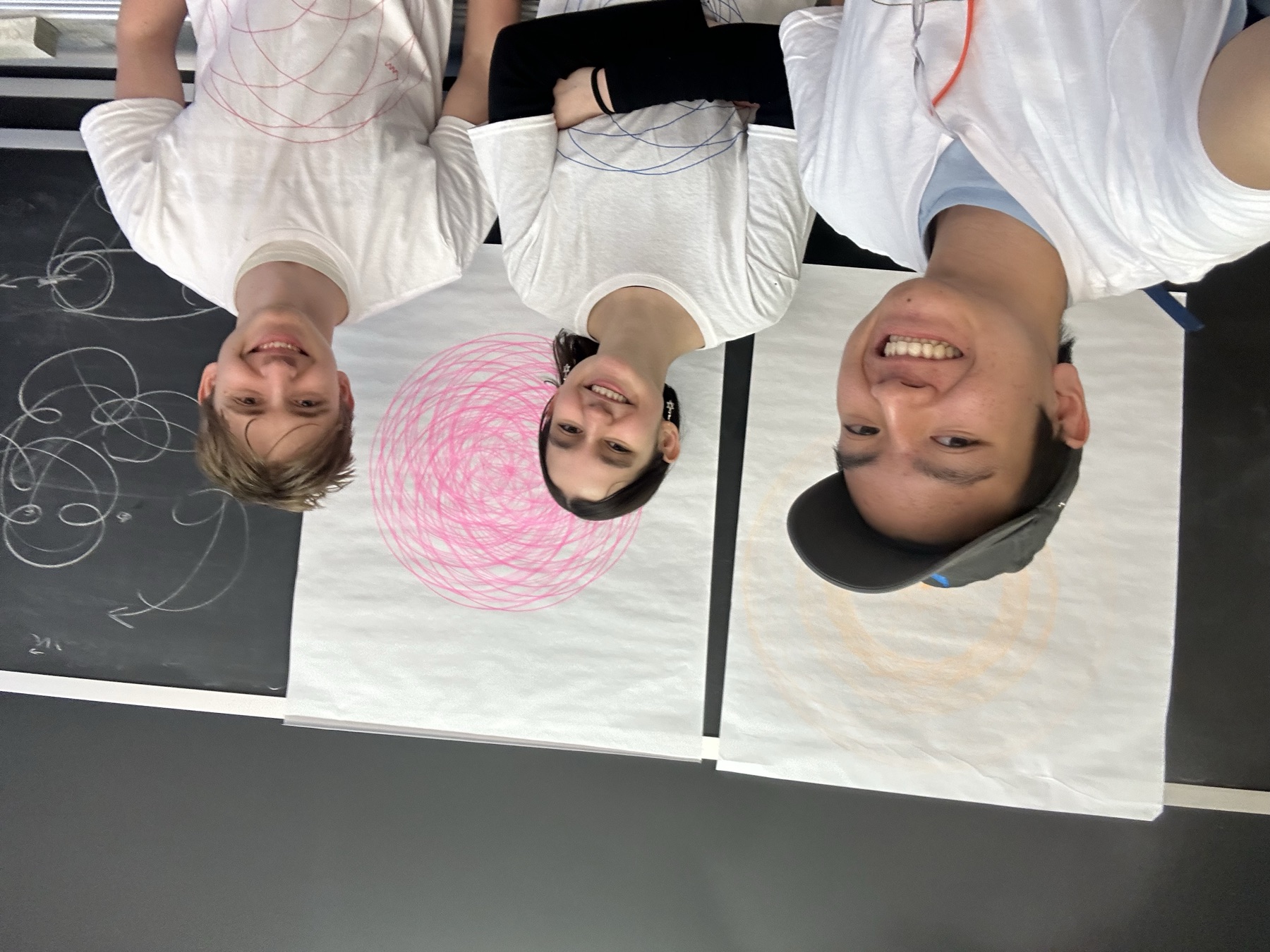
Results. The finished machine produced a wide range of geometric and organic patterns from one motor and a chain of mechanical linkages. The pen traced smooth, continuous curves (rosettes, flower-like shapes and nested loops) that slowly filled the page. Building it strengthened my understanding of kinematics, tolerances and structural rigidity. I saw firsthand how slight misalignment or flex in the frame affects motion quality and line smoothness.
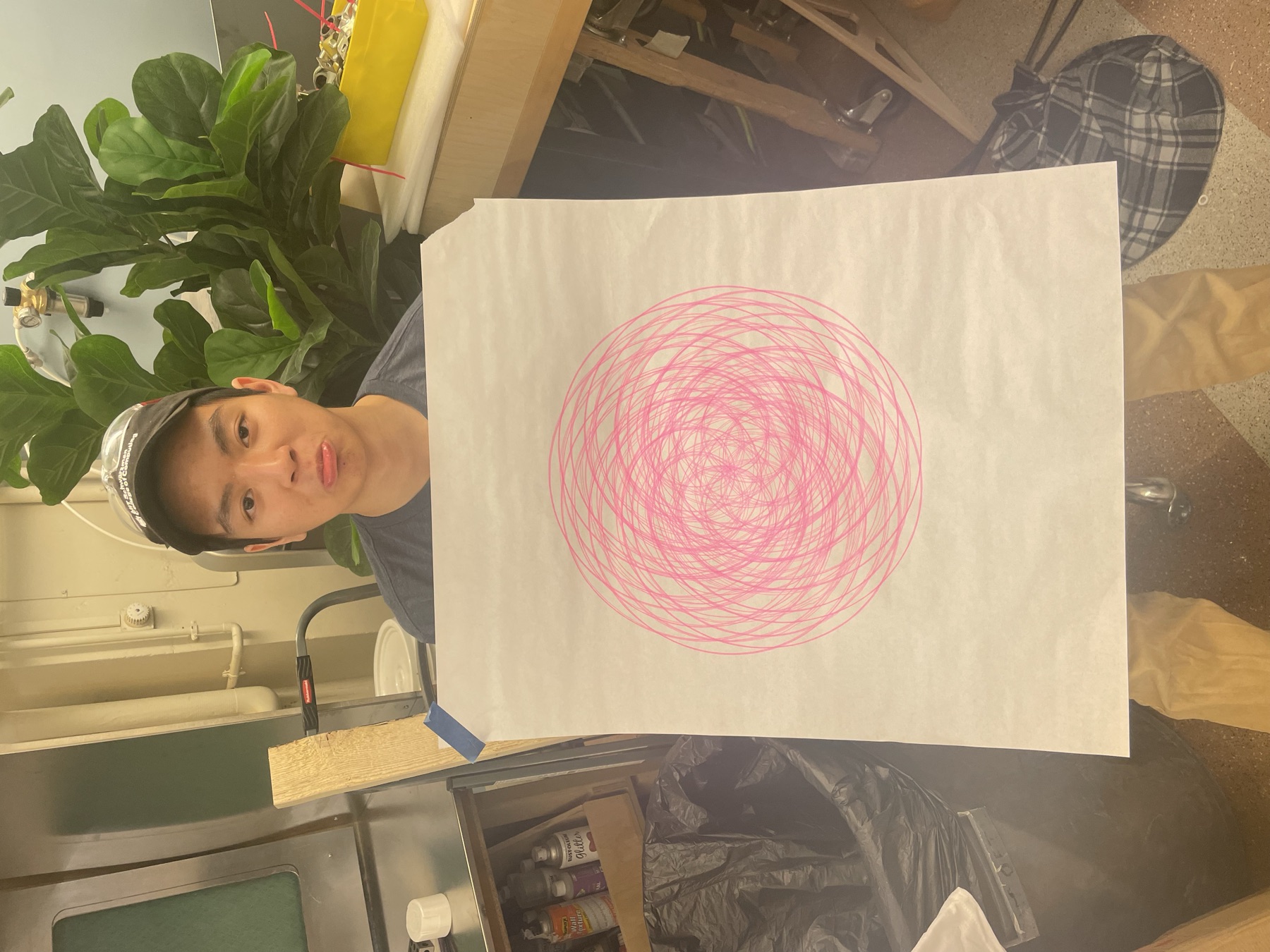
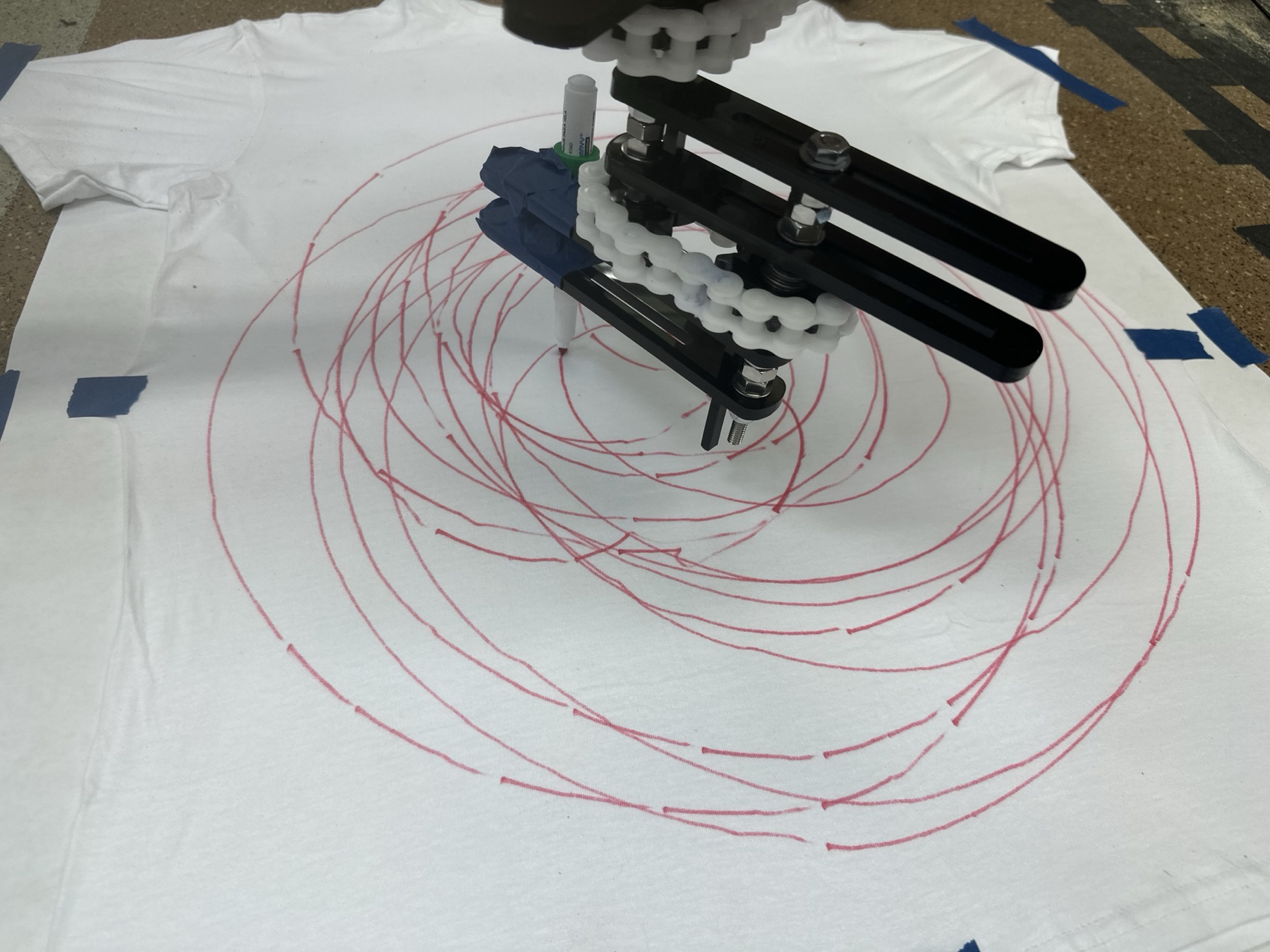
The completed machine in operation.
More photos